Camp USAFA Memories

This evening my Air Force Academy roommate and buddy, Brad Ball, let me know that an Academy graduate and CS-05 Wolfpack 4 degree we both knew, Brian Burns, passed away in November 2025. Brian had a distinguished 26 year career in the US Air Force, as an F-16 pilot and a member of the Thunderbirds. As a 4 degree or freshman at USAFA in 1989-90, cadets were matched up with a 3 degree (sophomore) during “Recognition Training.” The 4 degrees were, at that time, known as our “hell kids.” Brian was Brad’s hell kid. Those were the days before digital cameras, but I had a Nikon SLR I used throughout my academy days, and I have several pages of an old photo album dedicated to the CS-05 Wolfpack 4 degree Class of 1993’s Recognition Weekend. I thought I might have a photo of Brian Burns, and I found one… The photo below features our 1992 classmate Art Newsome “training” both Brian Burns and Lori Van Dyke in the corner stairwell of Vandenberg Hall, in an event notoriously known as the “Stairway to Heaven.” (Of course at the bottom of the stairway was hell… and it wasn’t fun to get sent down there.) Depending on how 4 degrees performed in a variety of physical hazing tasks during “Stairway to Heaven,” they would either be sent up a floor (if they “put out” or performed well) or sent down a floor, if their subjectively measured performance was sub-par. As I recall this “Recognition weekend event” lasted about an hour and was quite physically exhausting, especially for the 4 smokes. The activity Art was challenging Brian and Lori to do was “get your knees up,” and they were supposed to run in place and have their knees repeatedly make contact with his raised hands.

An Air Force Academy upperclass cadet / instructor in a white t-shirt and blue beret leads several trainees in camouflage uniforms through a physical exercise or drill indoors.
Art Newsome training Brian Burns and Lori Van Dyke – May 1990 (CC BY 4.0) by Wesley Fryer

Finding this old photo, I decided to scan and share it, along with a few others. They each deserve some context and description.

Staying with the May 1990 Wolfpack recognition training theme, here’s a photo of me (on the left) marching our squadron’s 4 degrees in front of the Academy’s main athletic building. Behind me you can see classmates Tracy Sailer and Jason Marshall, and others. That Spring 1990 semester I was our squadron “Training Clerk,” which meant I was the three degree (sophomore) responsible for military training. In our chain of command we had a squadron training officer (a firstee or senior) as well as a squadron training NCO (a 2 degree or junior), but in those days the Academy let us (as three degrees) have quite a bit of responsibility as well as latitude for overseeing fourthclass training. From what I understand now, that is not the case currently… Academy juniors and seniors have primary responsibility for 4 degree training. I was definitely “into” military training as we understood it in that time and context, I later served as our squadron training NCO and squadron training officer in later years.


A group of military trainees in camouflage uniforms and patrol caps march in formation on a paved outdoor walkway, passing a large building with extensive windows and an adjacent athletic court. C3C Wesley Fryer (on the left) marches the CS-05 "Wolfpack" Class of 1993 during Recognition Weekend training.
Marching the Squadron (CS-05 WolfPack – May 1990 – Class of 1993) (CC BY 4.0) by Wesley Fryer

Staying with uniformed photos from the same era, here’s a photo of the first time I ever saw my first car, a 1987 Jeep Wrangler. At the Air Force Academy, cadets are not allowed to have their own car on campus until the start of their junior (or “secondclass”) year. As I recall, my dad drove the jeep from Manhattan, Kansas, to Colorado Springs and brought it to me during June Week. In this photo I still have on my thirdclass shoulder boards, so that means the photo was taken before graduation at the end of May.

Wesley Fryer in May of 1990, wearing a blue Air Force Academy service dress uniform, smiles while posing with one foot on the step of a maroon 1987 Jeep Wrangler in a parking lot.
First look at my Jeep / First Car – Spring 1990 (CC BY 4.0) by Wesley Fryer

This final photo of me in uniform was taken in the summer of 1990 in Lima, Peru, at the Peruvian Air Force Academy. I was selected to attend this official Academy exchange program along with classmate Bob Seifert, a female cadet (whose name eludes me currently) and our USAF escort officer… whose name I also don’t remember. I have two versions of this photo, and I’m sharing the one where I have a silly expression… Seeing this makes me wonder where these cadets went on to serve in the Peruvian Air Force, and what they did in their careers? At that time the Shining Path was very active and posed a dangerous threat in Peru. I have some very fond memories of that exchange experience, we definitely helped me improve my Spanish skills considerably… and likely contributed to the opportunity I had after graduation to study in Mexico City for a year on a Fulbright Scholarship.

A group of cadets from the US Air Force Academy and Peruvian Air Force Academy, along with Air Force personnel from the United States and Peru, in blue dress uniforms pose for a photo on the steps of a building labeled "Batallon de Cadetes" under an "EO-FAP" crest.
Peruvian Air Force Academy Exchange (Summer 1990) (CC BY 4.0) by Wesley Fryer

This next photo isn’t one I scanned tonight, but I can’t mention that exchange trip to Peru without sharing it. This was my Christmas card in December 1990 I gave to family and friends, and it’s a photo of me at Machu Picchu in southern Peru. My high school Spanish teacher, Rosalie King of Manhattan High School, was the first person to ever tell me about and show me photos of Machu Picchu. It was always her dream to visit it, but I’m not sure she ever did. As I recall, I did visit her back in her Spanish classroom at Manhattan High after I made this trip, and I shared my photos with her. She was thrilled. (It’s a good thing to maintain connections with the school teachers who were a big influence on your life, by the way.)

1990 Christmas Card – Wesley Fryer at Machu Picchu, Peru (CC BY 4.0) by Wesley Fryer

Three more photos to share.

This next one is another Jeep photo… it’s me in my Jeep Wrangler, this time with the top off, parked in front of Wes and Barbara Dieter’s house in Colorado Springs with Pikes Peak visible in the background. Oh I did love that jeep!

Wesley Fryer, in a plaid shirt, stands inside a maroon, open-top Jeep Wrangler, resting his hands on the roll bar while parked on a residential street in Colorado Springs, with Pikes Peak in the background.
My 1987 Jeep Wrangler (Fall 1990) (CC BY 4.0) by Wesley Fryer

I’ll finish with two camping and outdoor adventure photos. After our 2 degree academic year started in the fall of 1990, my buddies Monte Anderson, Will Roff, and I went camping north of the Academy in Saylor Park. This was a shot one of them took of me cooking hash and eggs for breakfast. That’s still one of my favorite breakfasts to cook when camping!

A young man sits on a rock at a wooded campsite, using a portable stove to cook a meal in a frying pan with a maroon Jeep parked in the background.
Hash and Eggs for Breakfast (Fall 1990) (CC BY 4.0) by Wesley Fryer

As an aside, I was really fired up to be able to put my jeep’s 4 wheel drive to use on this trip… but I wasn’t very knowledgeable about taking care of my standard transmission clutch. I ended. up “burning out” my clutch on that trip. We were able to drive back to “the hill” fine, but I had to get it replaced soon after… I think it costs like $700 at the time to replace. That made it an expensive trip!

Last photo: This is Monte Anderson and I rapelling off some rocks in Saylor Park near our campsite that same weekend. We thought we were pretty cool…


Wes Fryer and Monte Anderson rappel down a large, rounded granite rock face over a vast evergreen forest under a clear blue sky. In Saylor Park west of Monument, Colorado, in the fall of 1990.
Rapelling in Saylor Park with Monte Anderson (Fall 1990) (CC BY 4.0) by Wesley Fryer

It’s sobering to read obituaries like I did this evening of folks I went to college with, and even people who are / were younger than me. Life is short. I’m getting older.

But I’m thankful for the memories.

And the chance to (hopefully) make even more memories with family and friends!


A man in a blue t-shirt and a young woman in a blue Air Force service dress uniform smile for a selfie in front of a red car in a crowded parking lot.
Rachel’s new car! USAFA Graduation 2025 (CC BY 4.0) by Wesley Fryer

Exploring Landsford Canal and Tivoli Plantation History (William Richardson Davie)

Today Shelly and I returned to Landsford Canal State Park in South Carolina, which is about an hour drive from where we live in Charlotte, NC. I took a few photos (26) on our hike and shared those to Flickr. As a storychaser, I also recorded 17 video clips and edited those this evening into a 20 minute summary video: “Exploring Landsford Canal State Park: Historic River Locks, Mill Ruins, and the Fall Line.”

While our hike and explorations today were wonderful, my historical discoveries AFTER our return were equally amazing thanks to a Notebook LM notebook I created using the 2004 research document, “Finding Tivoli: An Archaeological Search for William Richardson Davie’s Home at Land’s Ford, Chester County, South Carolina (revised) by R. P. Stephen Davis, Jr. and Brett H. Riggs.” While on our hike, I used the audio “talk with me” features of the Claude AI’s iOS app to ask a variety of questions about the cultural history, geology, and geography of the Landsford area. Those searches, along with Google searches, turned up this 2004 research document.

I published a 42 minute audio deep dive from this “notebook” to YouTube, with an accompanying thumbnail image I created with Claude Pro AI (for the prompt) and Gemini Pro AI for the actual image. The full transcript of that audio deep dive is also available as a Google Doc.

This entire “audio deep dive” is AMAZING for multiple reasons:

  1. The audio format allowed me to listen to not only the details of this entire research paper (which I was NOT going to read meticulously this evening) but also benefit from the added analysis of the Notebook LM AI “deep dive” hosts.
  2. The challenges of verifying the location of the Tivoli plantation, which was completely burned to the ground in 1865 at he conclusion of the US Civil War, seem staggering to me.
  3. The original, primary documents which the researchers used in this investigation, including oral histories, are fascinating to learn about but also encouraging given my ongoing oral history work with my middle school students, as well as community oral history in Mint Hill, NC.

I want to share the closing sentences and thoughts from the deep dive podcast as a text quotation, because they speak so clearly and directly to MY OWN passion for “uncovering invisible history” and seeking to preserve both family and community history:

Think about this: we only know to look for Tivoli, and we only have the resources to find it, because William Richardson was a highly literate, incredibly wealthy founding father who left behind a massive paper trail of letters, official state maps, and estate inventories — and had the wealth to import Canton porcelain that survives in the soil. And even with all of those advantages, his massive physical footprint was almost completely erased by the forest in just over a century. So if it takes decades of dedicated scientific effort, aerial photography, and archival deep dives to justify the ghost of a founding father’s mansion, what chance do the other 116 people who lived on that plantation have of being remembered by the earth — the enslaved individuals who were legally barred from leaving written records, who didn’t own land deeds, and who didn’t eat off imported Chinese porcelain? Their history is profoundly invisible in that exact same soil. It asks us to consider not just the history we are actively trying to find, but the history that the earth has already quietly swallowed whole. Think about the ground you walk on every day — what invisible histories, what forgotten empires or local legends are buried just inches beneath your own backyard. The landscape around us is a deeply layered archive, but we must always critically question whose stories we are equipped to read.

What a challenge indeed!

If these topics are of interest to you, in addition to checking out the “Storychasers” website which I’ve continued to build out since moving to North Carolina 3 years ago, I encourage you to check out the videos and resources on the “Racial Healing Through Digital Storytelling” page I’ve started there.

So much work to do before we sleep…

Grandfather Mountain Backpacking Adventure (June 2022)

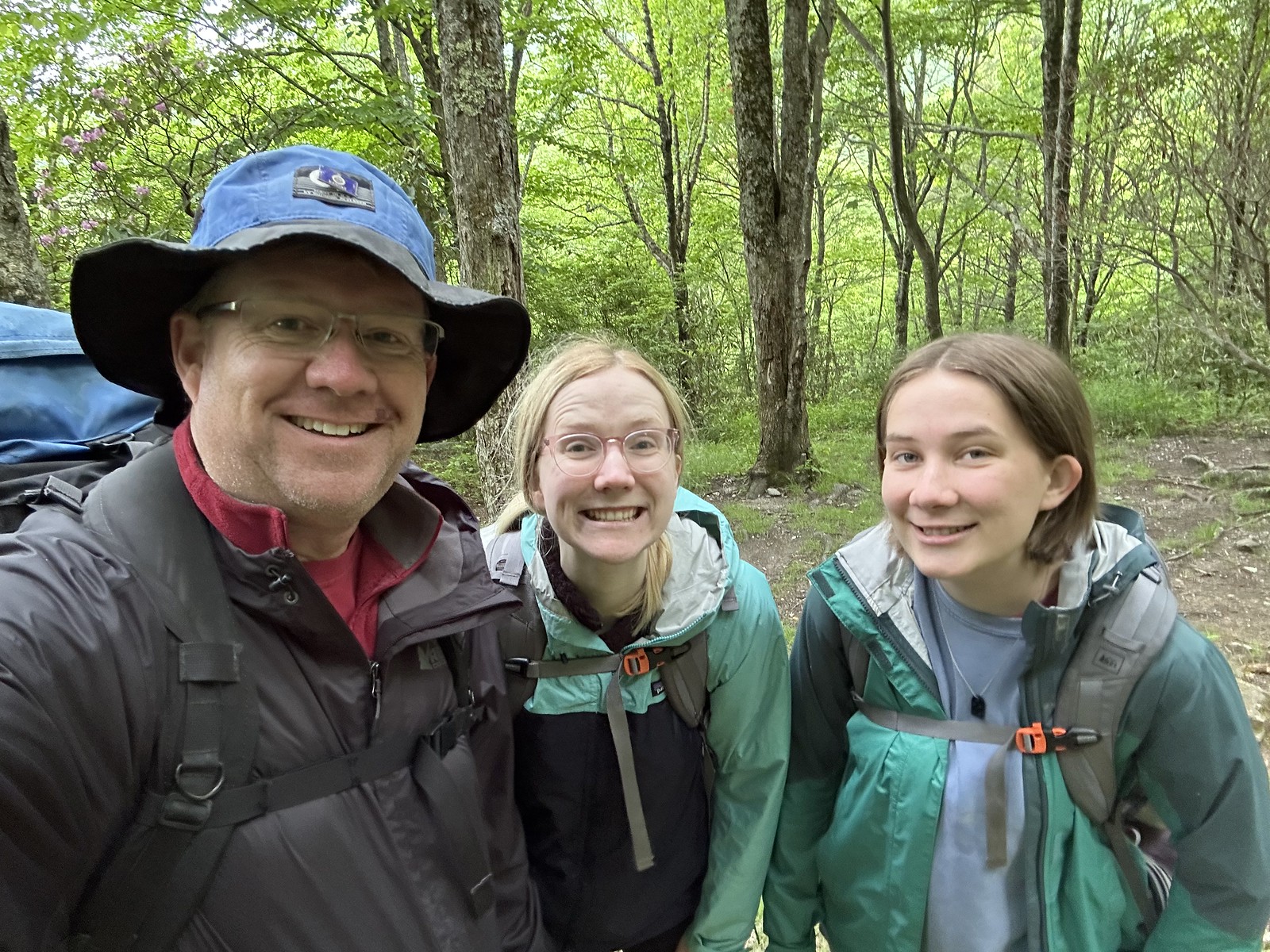
In early June 2022, I had the privilege to journey with our daughters to the Grandfather Mountain State Park for the first time. We embarked on a three-day, two-night backpacking adventure and relished a wonderful experience. Although we ended up hiking more on the second day than planned, leading to some exhaustion, the overall trip was superb. In this post, I aim to reflect on our journey, the trails we trekked, and my overall impressions of both the Grandfather Mountain Biosphere Reserve and the Grandfather Mountain State Park.

Grandfather Mountain Backpacking (June 2023)” (CC BY 2.0) by Wesley Fryer

Overview of Our Trip

We have been residing in North Carolina for a year, and I have previously enjoyed backpacking and camping. I aimed to provide our daughters, aged 19 and 22, with a memorable backpacking experience, while also allowing them to appreciate the beauty of the Blue Ridge Mountains and the Appalachians of North Carolina. I had heard from friends that Grandfather Mountain was an outstanding place to hike and explore, and they were absolutely correct.

I recorded quite a few video clips during our trip, and I edited these together along with a few still images in a 12.5 minute video using iMovie for iOS.

Back in March, during Easter Weekend, my wife and I stayed at a vacation rental in Deep Gap, near Boone, and spent some time driving along the Blue Ridge Parkway. It was then we discovered the Boone Fork Parking Area, which served as our launch point for this adventure. Our planned route to the Storytellers’ Rock campsite was a modest one-and-a-half-mile journey, ideally completed in about an hour. I made reservations online a couple of months in advance and planned to arrive on Sunday afternoon, which gave us plenty of time to hike into camp and set up.

Grandfather Mountain Backpacking (June 2023)” (CC BY 2.0) by Wesley Fryer

Impressions of Storyteller’s Rock and the Nuwati Trail

The Nuwati Trail, leading to Storyteller’s Rock, isn’t particularly challenging, but it is rocky with many roots. It’s now essential to make camping reservations online and fill out a written camping form upon arrival, noting your plans and emergency contact information.

I chose Storyteller’s Rock due to its impressive views and reported native history, as well as its proximity to several streams and water sources. Purifying water is crucial in the backcountry, and I recorded a short video demonstrating three different methods of water purification.

The campsite was ideal; we particularly loved the wooden platform provided for tents and the excellent fire ring.

Grandfather Mountain Backpacking (June 2023)” (CC BY 2.0) by Wesley Fryer

We didn’t encounter any bears, but they are present in the area, so it’s important to take bear precautions seriously.

View from Storyteller’s Rock” (CC BY 2.0) by Wesley Fryer

Daniel Boone Trail to Grandfather Mountain

On the second day, we returned to the Nuwati Trail and connected with the Daniel Boone Trail, which follows the entire ridgeline up to the top of Grandfather Mountain. This challenging and rigorous hike offered spectacular views. If you plan to tackle the entire trail, ensure you are in excellent physical condition and prepared for a significant challenge.

Grandfather Mountain Backpacking (June 2023)” (CC BY 2.0) by Wesley Fryer

Overall Impressions of Grandfather Mountain Biosphere Reserve and State Park

Grandfather Mountain Nature Preserve and State Park are breathtaking areas of North Carolina. As new Charlotte residents, it’s fantastic to be just a couple of hours from the mountains. The communities of Blowing Rock, Boone, Banner Elk, and Linville are conveniently close.

We plan to return later this summer, having chosen to join the Grandfather Mountain non-profit and truly take advantage of the summit’s hiking trails. The area reminds me of Pikes Peak in Colorado Springs, which you can drive to the top of, but Grandfather Mountain offers a greater range of trail options. This spectacular area offered us a chance to introduce our girls to the Blue Ridge Mountains of North Carolina.

If you’re planning a trip, I recommend the mobile app ‘AllTrails,’ which proved invaluable on our journey, tracking our mileage and elevation changes, and allowing us to see precisely where we were on each trail.

Grandfather Mountain Backpacking (June 2023)” (CC BY 2.0) by Wesley Fryer

Conclusions

To conclude, I’ll share a short video of a black bear we encountered at the Grandfather Mountain Preserve, which was one of the most incredible experiences we’ve ever had with a bear, either in a zoo or in nature. 

Grandfather Mountain is indeed magical, and I am eagerly looking forward to our return. If you’re considering a trip to North Carolina, I highly recommend making Grandfather Mountain State Park a priority – it’s an adventure you won’t forget.

Grandfather Mountain Backpacking (June 2023)” (CC BY 2.0) by Wesley Fryer

AI Attribution: I used the Open AI iOS applications Whisperboard and ChatGPT to create and edit the text in this blog post.

“The day after” (Thanksgiving)

“The day after.” (Thanksgiving)

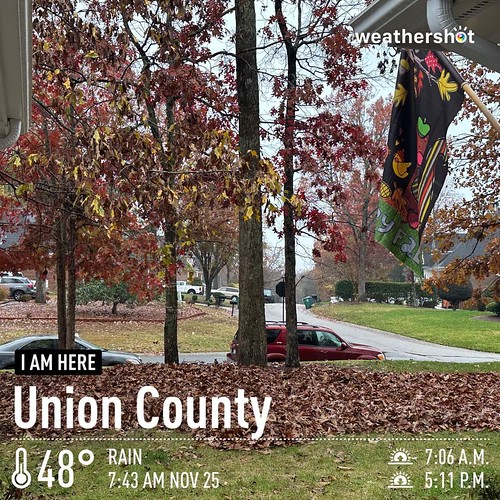
Rain in our forecast all day long. It is lovely as it falls on the roof, especially on our back sunporch. The leaves we blew into tall piles on Wednesday have already started to “settle.” I am amazed how little wind there is here in North Carolina. In Oklahoma, all these leaves would’ve probably already blown away. Here, they patiently wait for us to bag them up and send them to the dump.

Our dogs love to look out the front storm door, and into the backyard through the sunporch glass. The continual activity of our neighborhood squirrels make the world outside our house seem like an amazing zoo of interesting activity.

We continue to recover from the trauma of our cross-country move last summer. I am thankful to be still, to not have anywhere to go today.(Except the gym with our USAFA-application motivated daughter!)

I am thankful to have a warm cup of coffee in my hand, a sleeping bag for my blanket, and my amazing life partner at my side. And two loving golden retrievers who lie, occasionally, at my feet.

Thanksgiving 2022 in North Carolina.

Rachel Reports from the Volcano House

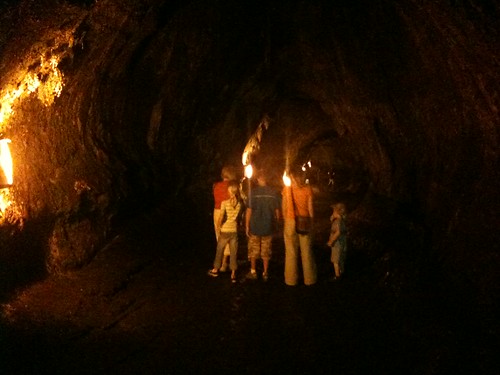
Today in my STEM class I showed an amazing video of eruptions from the Kilauea Volcano in Hawaii. This was one of our “curiosity links” for this week. In one class, student questions about how lava cools led me to discuss “lava tubes” and show this photo of a lava tube which I took in 2009 when our family visited the big island.

I ended up also finding this short video of Rachel, at age five, reporting from the Volcano House. Oh how this makes me want to go back to Hawaii with our family!

Planting Pumpkin Seeds

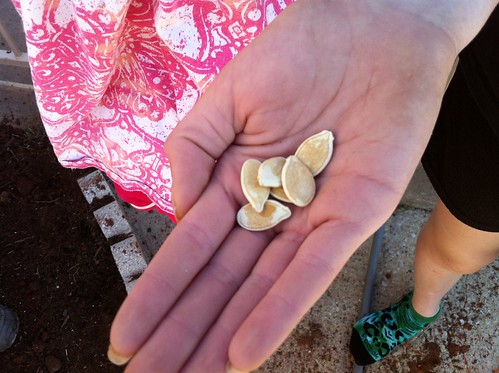
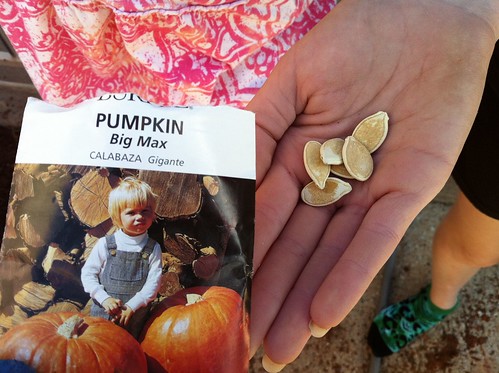
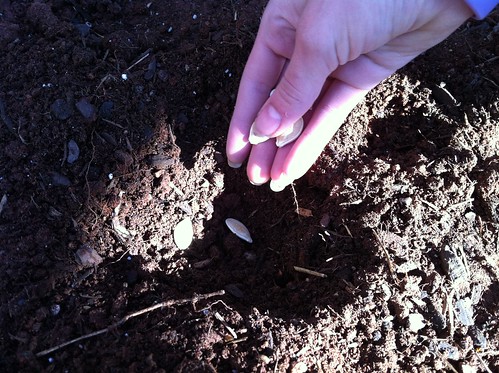
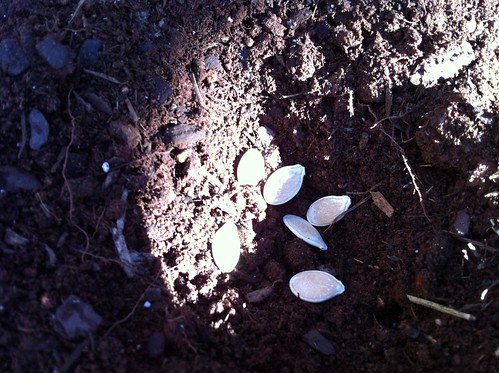
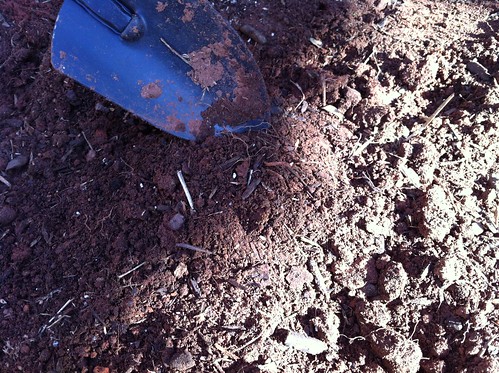
Today we worked in our flower and vegetable beds in our front and backyard. Among other things, we planted some pumpkin seeds. We’re not sure if we’ll get any pumpkins (or cantaloupes, or ears of corn) but we’re going to give it a shot! Later this month we’re going to plant some tomatoes too. Here are a few photos from today’s inaugural planting, along with a short video narrated by Rachel. I’m thinking these photos will make a great narrated slideshow if we keep taking pictures as the plants grow in upcoming weeks.

We Planted 4 - 6 Seeds in Each Hole

These are seeds for "Big Max" Pumpkins

Putting seeds in the hole

Pumpkin Seeds in the Hole

Covering up the hole with dirt